
Shop on any online dispensary in British Columbia right now and you’ll notice live resin sitting at the top of the concentrates page. It’s the one product reviewers keep calling the most flavourful, the one experienced consumers reach for when they want flower-like complexity without the smoke, and the format craft producers across BC have been quietly perfecting for years.
But the term still confuses a lot of people. Is it a vape thing? A dab thing? Is it stronger than flower? Is it legal in Canada? Is it different from rosin — and if so, how much does that actually matter?
This Canada-focused live resin guide answers all of it. You’ll learn what the product is, how it’s made, how it compares to other concentrates like shatter and distillate, what the experience feels like, how to use it without wasting any, what the rules are around buying it in Canada, and how to tell the good stuff from the mediocre stuff. By the end you’ll know whether this concentrate belongs in your rotation — and where to find a clean version from a Canadian producer.
What Is Live Resin?
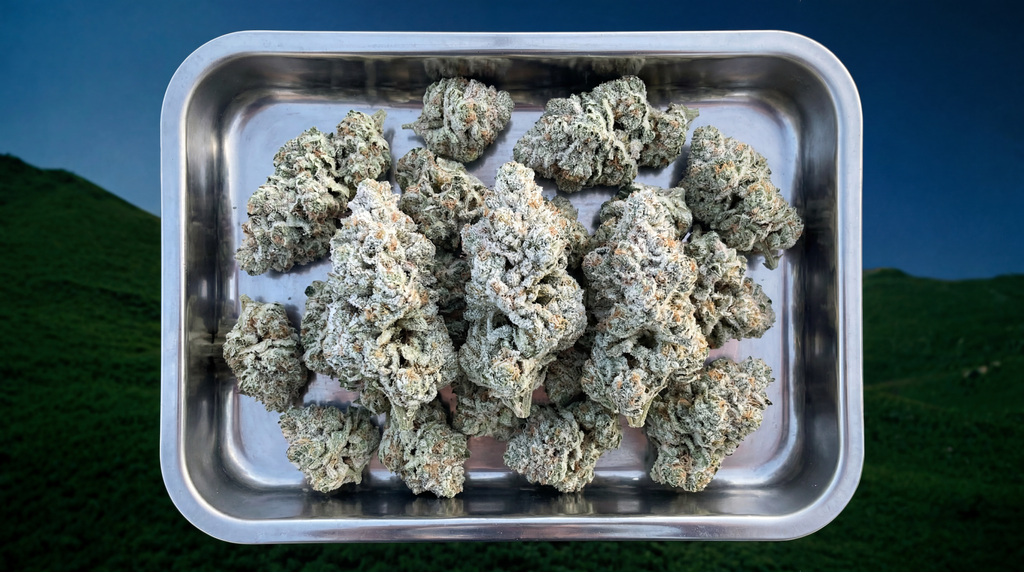
Live resin is a cannabis concentrate made from fresh-frozen flower instead of dried and cured buds — sometimes also called living resin by retailers. That single difference — freezing the plant at peak harvest rather than drying it out — is what gives this concentrate its signature flavor, aroma, and complexity. As Weedmaps explains, the result is a sticky, gold-coloured extract loaded with terpenes that smell and taste remarkably close to the living plant.
How Live Resin Is Made
The process is precise and time-sensitive. Producers harvest cannabis plants at peak ripeness and flash-freeze them within minutes — no drying, no curing. The frozen material is then run through a closed-loop hydrocarbon extractor (usually butane, sometimes propane or CO₂), kept cold the entire time to protect the volatile aromatic compounds. The resulting extract is purged of any residual solvent, then jarred. The whole process is engineered to keep the plant’s terpene profile as close to “living” as possible.
Why “Live” Matters
When cannabis is dried and cured the traditional way, it loses a lot of its aroma. Heat, light, and oxygen during curing can break down up to 60% of the original terpene content, according to extraction-focused educators at Sensi Seeds. Live resin sidesteps that loss entirely. The flavour on the exhale is brighter, more layered, and noticeably closer to what the strain actually smells like in the grow room. For consumers who chase flavor over raw potency, that difference is the whole point. For a broader look at the concentrate category, our ultimate guide to weed concentrates is a useful companion read.
Live Resin vs Other Concentrates
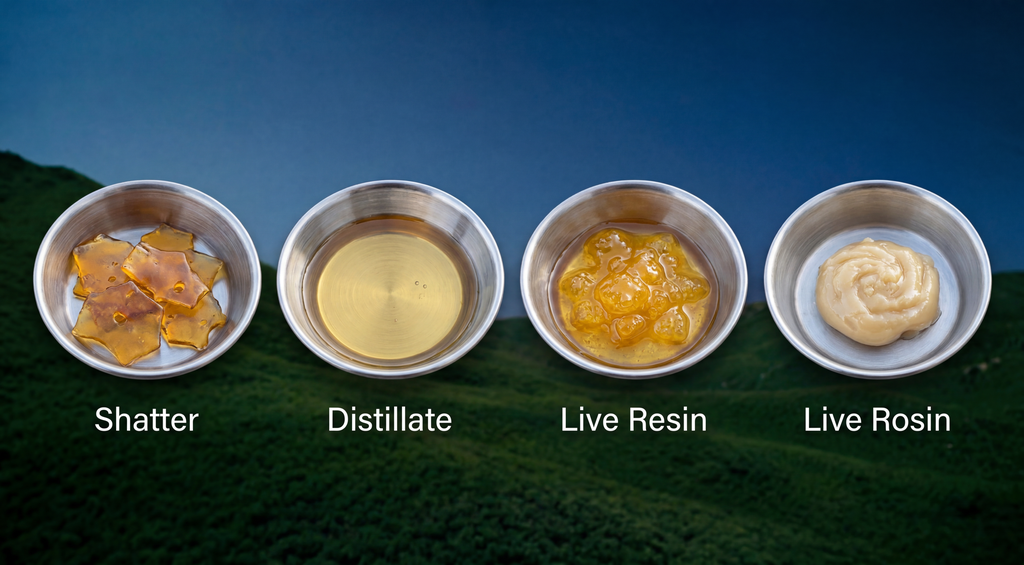
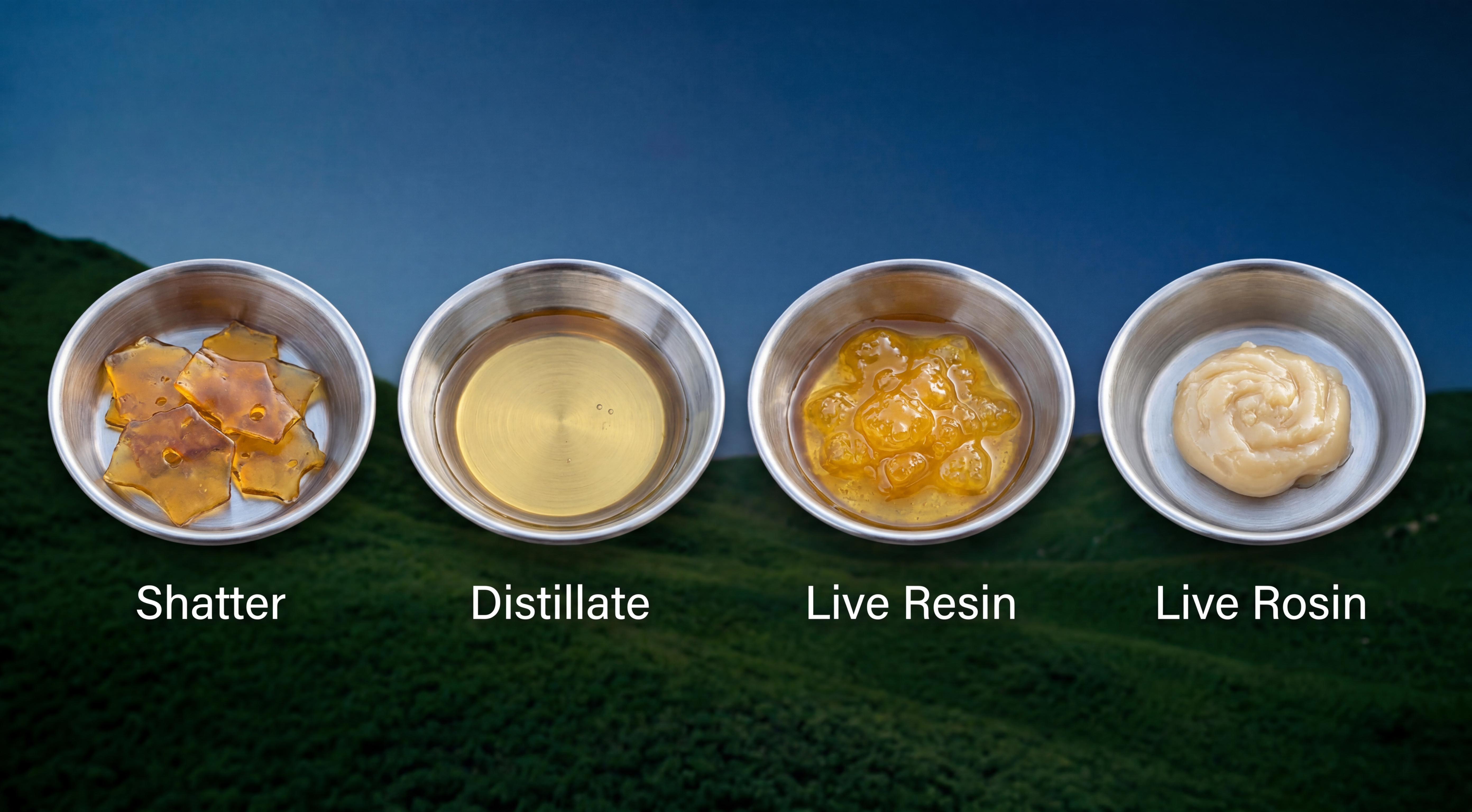
The concentrate aisle moves fast and the names blur together. Alongside live resin, the Canadian shelf typically includes shatter, budder, hash, live rosin, distillate, and cannabis oil. Here’s how the fresh-frozen format actually stacks up against the rest.
Live Resin vs Live Rosin
These two share a starting material — fresh-frozen flower — but split on the extraction method. Rosin uses heat and pressure only (no solvents). The resin process uses cold solvents like butane. The flavor is comparable, the price tags differ. Rosin is typically more expensive because the yield is lower, and the solvent-extracted version offers nearly the same terpene experience at a more accessible price. Our deep-dive on live rosin vs shatter gives a useful side-by-side if you’re choosing between solventless and solvent-extracted options.
Live Resin vs Shatter
Shatter is a brittle, glass-like concentrate usually made from cured (dried) plant material. It’s clean, stable, and easy to handle, but the terpenes are largely cooked off during processing. The fresh-frozen version is softer, sauce-like, and far more aromatic. Shatter wins on shelf life. Live resin wins on flavor.
Live Resin vs Distillate and Cannabis Oil
Distillate is a clear, nearly odorless oil refined to isolate THC. It’s potent (often 90%+ THC) but stripped of the natural plant character. Standard cannabis oil sits in a similar lane — refined, neutral-tasting, easy to dose. The fresh-frozen extract, by contrast, contains a “full-spectrum” mix of cannabinoids and terpenes, which many consumers find produces a more balanced, flower-like high. If you’re weighing the trade-off, our full-spectrum vs distillate breakdown walks through it in detail.
Live Resin vs Budder, Hash, and Cured Resin
Budder is a creamy, whipped concentrate made from cured flower — soft texture, moderate flavor, easy to scoop. Traditional hash has been a Canadian favourite for decades and still moves well on most dispensary shelves. Cured resin uses the same extraction techniques as live resin but starts from dried, cured flower. The output is cleaner-looking and shelf-stable, but the flavor is comparatively muted. Verilife’s strain education team frames the trade-off neatly: cured emphasizes consistency, the fresh-frozen approach emphasizes character.
What Does Live Resin Feel Like?
Terpene-Driven Flavor
The first thing most people notice is the taste. A citrus-forward strain actually tastes like fresh citrus — sweet, bright, sometimes a little spicy on the back end. A gas-leaning strain will land peppery and herbaceous. The terpenes do most of the storytelling. It’s the closest concentrate experience to smoking the flower itself, and for many consumers that’s the whole reason to buy it.
Potency and Effects
THC content typically runs between 65% and 85%, as Leafwell notes in its concentrate guide. Compared to flower averaging 20% THC, that’s roughly three to four times the potency by weight. The effects come on quickly — usually within minutes of inhalation — and they tend to feel more balanced than distillate hits because the full terpene profile is along for the ride. Most users describe the experience as a richer, more dimensional version of a flower high.
How Long Effects Last
Inhaled effects typically peak in the first 15–30 minutes and taper over the next one to three hours, depending on dose and tolerance. The comedown is generally smoother than with high-purity distillate, which some users find harsher coming down.
How Do You Use Live Resin?
Dabbing with a Rig
Dabbing is the classic method — a dab rig, a quartz banger, a torch, a carb cap, and a metal dab tool. Heat the banger, let it cool to roughly 500–550°F for the cleanest flavor, drop a rice-grain-sized portion onto the banger, cap it, and inhale slowly. Lower temperatures preserve terpenes; higher temperatures destroy them. Leafly’s primer on dabbing concentrates covers the technique in more detail. New to dabs? Start with half the dose you think you need.
Live Resin Vape Carts
The easier entry point. Pre-filled cartridges thread onto a standard 510 battery and you simply inhale — no torch, no rig. Set your battery to its lowest voltage to keep the terpenes intact. The Ascend Live Resin Cartridge is a clean BC option that pairs well with most pen batteries, and our roundup of weed vape cartridge types is worth a read if you’re new to carts.
Adding to a Joint or Bowl
You can also “twax” — apply a small amount of concentrate to the outside of a joint, dab it onto a packed bowl, or layer it inside a joint as you roll. This is the easiest way for a flower user to try this format without buying any new equipment. Pre-infused options like Dope Theory’s Live Resin Caviar bring this experience to market in a ready-to-smoke format.
Is Live Resin Legal in Canada?
The Cannabis Act and Concentrates
Yes — concentrates are legal in Canada under the federal Cannabis Act, which has authorized adult-use sales of cannabis concentrates since the second wave of legalization in late 2019. The framework, administered by Health Canada, treats this format like any other regulated concentrate: licensed producers, lab testing, plain packaging, and strict labelling requirements.
Possession Limits
Health Canada’s Cannabis Regulations cap personal public possession at the equivalent of 30 grams of dried cannabis. For concentrates, the conversion ratio works out to a maximum of 7.5 grams in public at any given time — roughly half a dozen 1-gram cartridges or several small jars. The cap applies to what you’re carrying outside your home; possession inside a private residence is governed separately.
Where to Buy in Canada
You can purchase this concentrate Kootenay Botanicasl, BC’s favourite online dispensary. We ship nationwide and offer same day delivery in Vancouver.
How to Spot Quality Live Resin
Color and Consistency
Premium live resin should look bright gold to amber, glossy, and slightly translucent. The texture should be tacky and pliable — somewhere between honey and putty. Dark brown, cloudy, or bone-dry product usually points to old age, poor purging, or a low-quality starting plant, as quality-focused producers at A Therapeutic Alternative break down in detail.
Aroma and Flavor
Open the jar. A good extract should smell unmistakably like the strain it came from — citrus, gas, pine, candy, whatever the genetics promise. If it smells faint, musty, or chemical, walk away. The aroma is the single most reliable quality indicator outside of a lab report.
Lab Testing and COAs
Reputable producers publish a Certificate of Analysis (COA) with potency, terpene content, and residual solvent results. For a craft option that consistently scores well on flavour and potency, Hive Live Resin in 28-gram size is one of the cleaner bulk options on the Canadian market right now.
Live Resin FAQs
Is Live Resin Stronger Than Flower?
Yes — by a meaningful margin. This concentrate typically tests at 65–85% THC compared to roughly 20% for premium flower. That said, “stronger” doesn’t mean “better.” Flower delivers a different experience because you’re inhaling the whole plant. The extract concentrates the active compounds, so a tiny amount goes a long way. If you’re used to flower, scale your first dose down by 75% and work up from there.
How Should I Store It?
Cool, dark, airtight. UV light and warm temperatures degrade both cannabinoids and terpenes — the two things that make this format worth buying in the first place. Glass jars in a drawer or fridge work well. Avoid leaving it out on a sunlit counter or in a hot car.
How Much Should a Beginner Try?
For dabs, start at the size of a single grain of rice — roughly 10–20 mg of concentrate. Wait ten minutes before considering more. For a vape cart, take a single one-second pull and pause for five minutes. The classic “start low, go slow” rule applies more to concentrates than to almost anything else in the legal market.
Final Thoughts
Live resin earned its reputation honestly. It captures the flavor of the cannabis plant better than almost any other concentrate format, it’s accessible across the entire Canadian legal market, and it works whether you’re dabbing on a Sunday morning or twaxing a joint on a Saturday hike. The trade-off is potency — the product deserves respect from anyone who hasn’t worked with concentrates before — but the experience, when dosed right, is one of the most flavor-forward in cannabis.
If you’d like to explore for yourself, our live resin selection brings together carts, jars, and infused flower from craft cannabis producers we trust. Browse the latest drops, check the COAs, and find a format that matches how you actually like to consume.